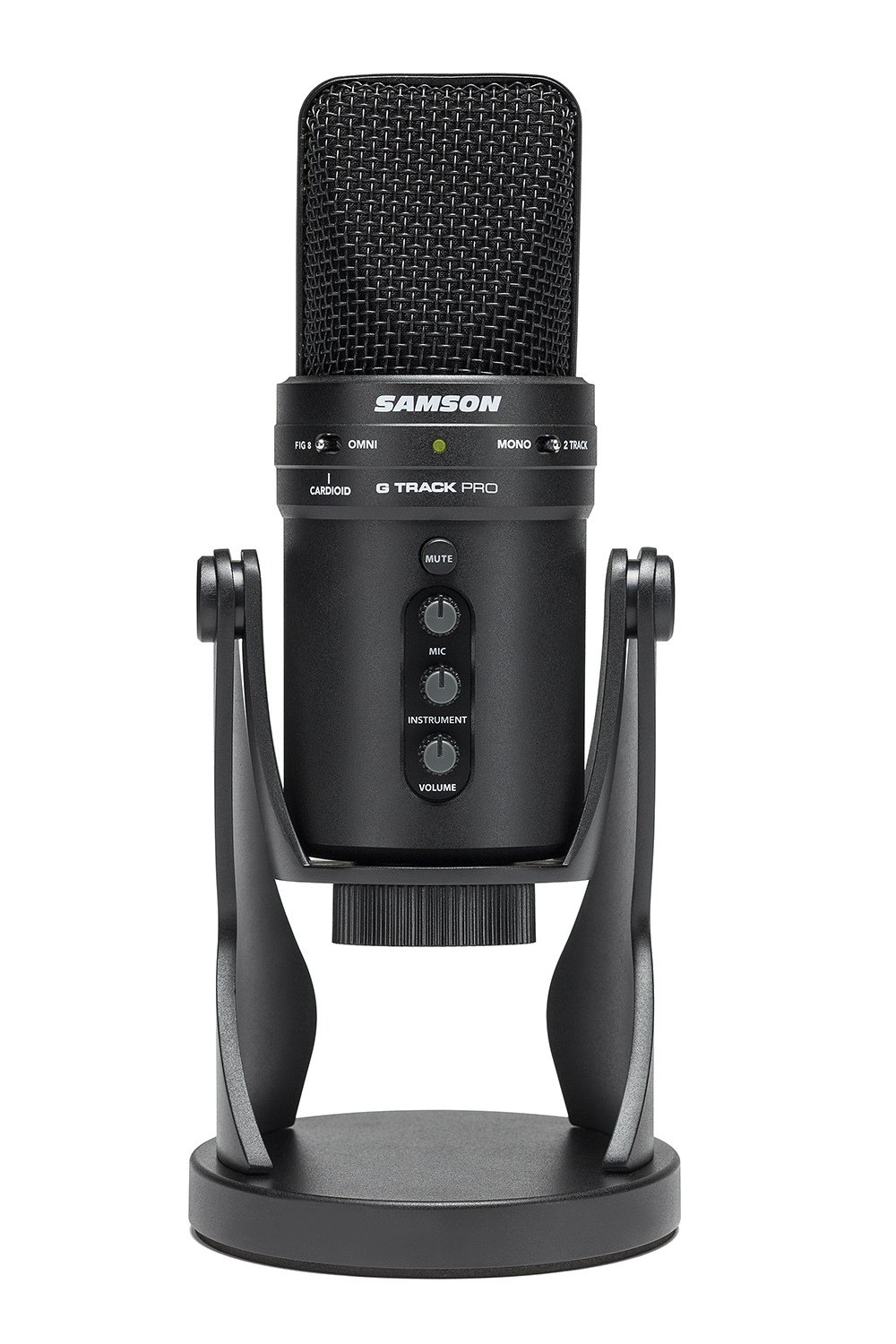
The Samson G-Track Pro combines a USB condenser microphone with an audio interface, giving podcasters, streamers, and musicians several ways to shape a recording setup.
This SAMSON SGTRACKPB review looks at its selectable pickup patterns, headphone output, and instrument input, along with the tradeoffs of choosing an all-in-one desktop mic.
Samson G-Track Pro Review Summary
The quick verdict
2,000+ ratings
Read Amazon ReviewsSamson G-Track Pro
A useful fit for podcasters, streamers, and musicians who want multiple pickup patterns plus an instrument input in one USB microphone.
- Dual back electret condenser element with a 25 mm diaphragm listed at 3 microns thick.
- Three polar patterns: cardioid, bidirectional, and omnidirectional.
- Frequency response of 50 Hz–20 kHz and maximum SPL of 120 dB SPL.
- USB digital output with 16- or 24-bit depth and sample rates up to 96 kHz.

Pros
- Multiple polar patterns let the same microphone serve different recording arrangements.
- Integrated audio interface and USB output make for a consolidated computer recording setup.
Consider before buying
- Three pickup patterns add flexibility, but buyers need to select the mode that matches their room and recording arrangement.
- The listed headphone output is 3.5 mm; check whether that connection fits your headphones or whether you will need an adapter.
Read the full review summary
The G-Track Pro brings three pickup patterns, direct USB output, headphone monitoring, and a quarter-inch instrument input together in one microphone.
That range makes it more adaptable than a basic voice-only USB mic: cardioid suits a single speaker, while bidirectional and omnidirectional modes can accommodate other recording arrangements.
It is best suited to someone who expects to record more than one kind of source and values a built-in interface over a separate collection of gear.
Its 16- or 24-bit recording at up to 96 kHz gives buyers format choices, while the listed 50 Hz–20 kHz response describes its frequency range.
Before buying, check that the desk placement and connection options fit the rest of your setup.
The buying factors
Samson G-Track Pro Scorecard
Editorial scores reflect listed features and buyer fit; they are not laboratory measurements or customer ratings.
Recording versatility
Three selectable pickup patterns support more than one recording arrangement.
Instrument integration
A quarter-inch instrument input with 1 MΩ impedance provides a direct connection point for an instrument.
Digital format options
Offers 16- or 24-bit recording at sample rates up to 96 kHz.
Monitoring provision
A 3.5 mm headphone output and listed headphone power support a direct monitoring setup.
Voice-focused use
Cardioid mode is a practical choice for recording one person in front of the microphone.
Setup simplicity
USB output and an integrated audio interface consolidate connections, though buyers should confirm compatibility with their own setup.
Key Features and Specifications of Samson G-Track Pro
- Dual back electret condenser element with a 25 mm diaphragm listed at 3 microns thick.
- Three polar patterns: cardioid, bidirectional, and omnidirectional.
- Frequency response of 50 Hz–20 kHz and maximum SPL of 120 dB SPL.
- USB digital output with 16- or 24-bit depth and sample rates up to 96 kHz.
- 3.5 mm headphone output, with 16 Ω impedance and 85 mW output at 32 Ω.
- Quarter-inch instrument input with 1 MΩ impedance.
Pros and Cons of Samson G-Track Pro
Pros
- Multiple polar patterns let the same microphone serve different recording arrangements.
- Integrated audio interface and USB output make for a consolidated computer recording setup.
- Instrument input adds a direct way to include an instrument in a recording workflow.
- Up to 24-bit depth and 96 kHz sample rate provide useful recording format options.
Consider before buying
- Three pickup patterns add flexibility, but buyers need to select the mode that matches their room and recording arrangement.
- The listed headphone output is 3.5 mm; check whether that connection fits your headphones or whether you will need an adapter.
- A combined microphone and interface may be less appealing if you prefer separate components that can be chosen or upgraded independently.
Who Should Buy Samson G-Track Pro?
Good fit
Consider the G-Track Pro if you record voice and instruments at the same desk and want the microphone to handle more than one role.
Its cardioid, bidirectional, and omnidirectional patterns give you options for solo narration, two-person positioning, or broader pickup, depending on the session.
The instrument input can also simplify a setup where you want to connect a source directly to the microphone's interface.
It is a reasonable choice for a creator building a USB-centered recording station who also wants headphone monitoring at the mic. The listed bit-depth and sample-rate options offer room to choose a format that fits your recording workflow.
Confirm your computer and recording software support the connection and formats you intend to use, and check that the microphone's placement works with your desk.
Who should skip it
Skip it if your only need is a straightforward voice mic and you do not expect to use alternate pickup patterns or the instrument input; those extra functions may not justify the more involved setup.
Look elsewhere if you specifically want a standalone XLR microphone to pair with an external interface. The G-Track Pro is presented as a USB microphone with an integrated audio interface.
What the Samson G-Track Pro Means for a Recording Setup
Pickup patterns for different sessions
Cardioid, bidirectional, and omnidirectional modes give the G-Track Pro a wider range of potential placements than a single-pattern mic.
Cardioid focuses the intended arrangement around a speaker in front, while the other patterns can be useful when participants or sources are positioned differently.
Consider the number and placement of people or sources you usually record before deciding whether that flexibility will matter.
USB interface and instrument input
The microphone's USB output and integrated audio interface consolidate computer connection and microphone functions in one device. Its quarter-inch, 1 MΩ instrument input is a notable addition for users who record an instrument alongside voice.
If your workflow depends on particular software, monitoring routes, or multiple simultaneous inputs, check those requirements against your setup before choosing an all-in-one device.
Recording formats and monitoring
Support for 16- or 24-bit depth and sample rates up to 96 kHz gives buyers choices for how recordings are captured.
The 3.5 mm headphone output provides a connection for monitoring, with listed impedance and output figures that help identify the connection and power specifications. Check your headphone plug and the monitoring behavior you need before committing.
Frequency range and level handling
The 50 Hz–20 kHz frequency response describes the range the microphone is specified to cover, while the 120 dB SPL maximum indicates its stated upper sound-pressure handling.
These figures help frame the design for voice and instrument recording, but do not determine the sound of a room or the results of a particular session. Placement and the selected pickup pattern remain practical considerations.
Alternatives to Samson G-Track Pro
Multipurpose Condenser Microphones alternative
34,000+ ratings
Read Amazon ReviewsFIFINE K669B USB Microphone
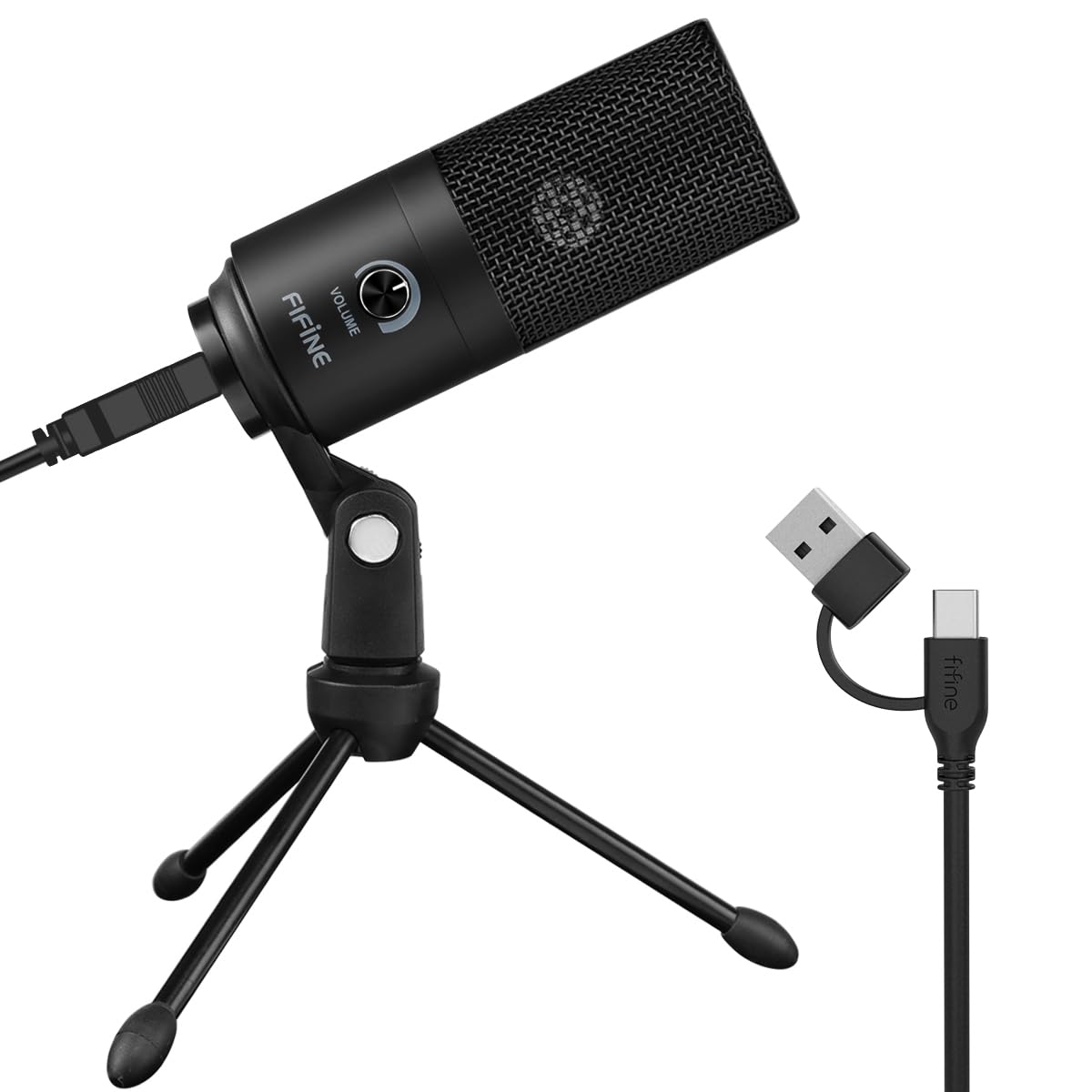
Choose the Samson if you need multiple pickup patterns or the instrument input. The FIFINE is a simpler voice-focused option for someone who wants a USB mic with a stand and onboard volume control.
- The FIFINE K669B is a cardioid USB condenser mic with a metal body, included 5.9-foot USB cable, tripod stand, and on-mic volume knob; its supplied description says it is not compatible with Xbox or phones.
- The Samson G-Track Pro includes three pickup patterns, an integrated audio interface, and a quarter-inch instrument input.
Multipurpose Condenser Microphones alternative
1,000+ ratings
Read Amazon ReviewsSamson C01 Large-Diaphragm Condenser Microphone
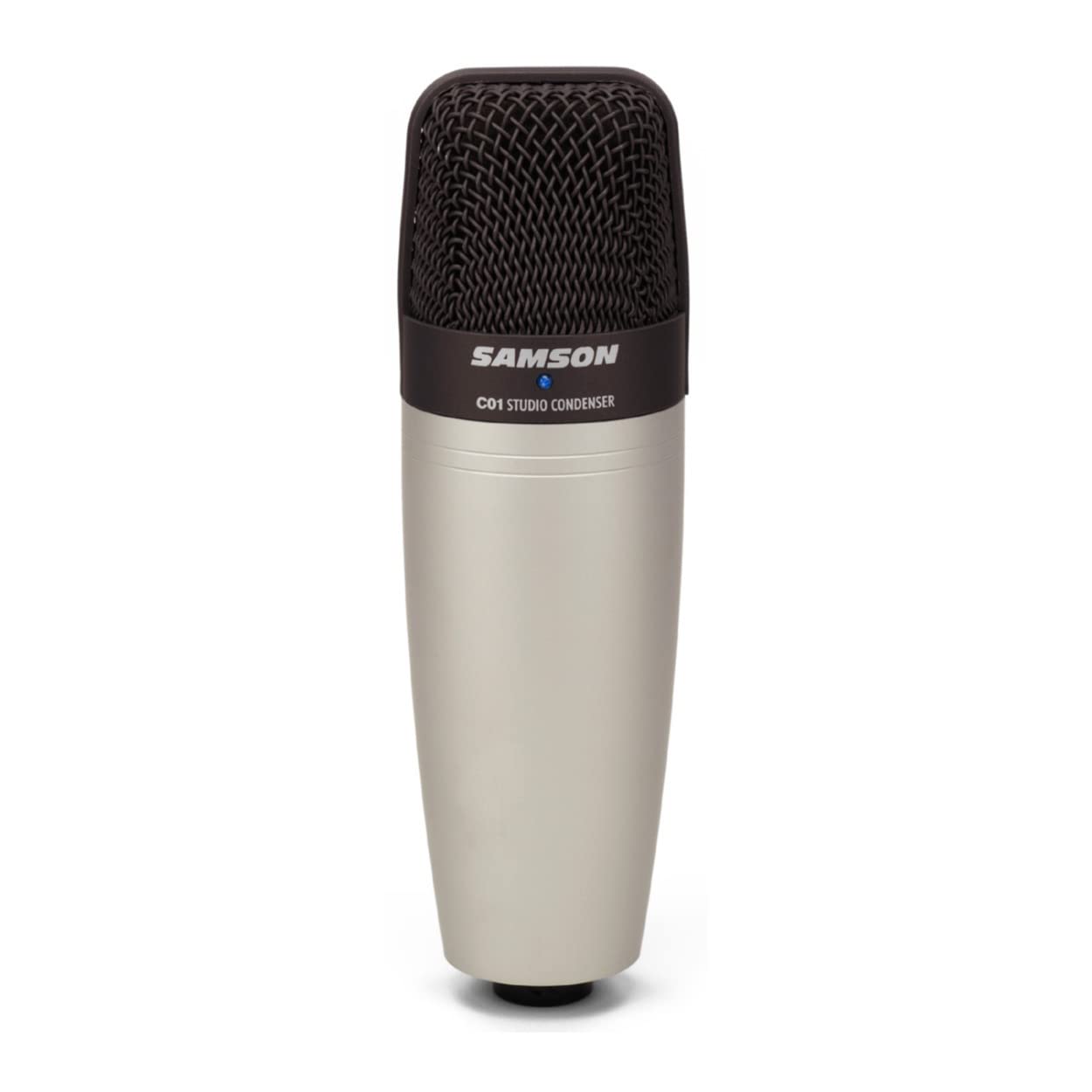
The C01 is worth considering if you want an XLR cardioid condenser and already have a suitable interface and phantom-power source.
The G-Track Pro is a better fit for a USB-centered setup that benefits from multiple patterns and direct instrument input.
- The Samson C01 has a cardioid pickup pattern, 19 mm diaphragm, heavy-gauge mesh grill, gold-plated XLR connector, and an LED that indicates 48 V phantom power.
- The G-Track Pro is a USB microphone with an integrated audio interface, three pickup patterns, headphone output, and instrument input.
Is Samson G-Track Pro Worth It?
The Samson G-Track Pro is worth considering when one USB microphone needs to cover voice, alternate pickup arrangements, and an instrument connection.
Its three patterns, integrated interface, headphone output, and flexible recording formats give it a practical range for a home recording or streaming setup.
Buy it if those features match your workflow and you are comfortable with a combined USB design.
If you only need solo voice capture, prefer separate XLR equipment, or will not use the instrument input and extra patterns, a simpler setup may be a better fit.
Your review at a glance
2,000+ ratings
Read Amazon ReviewsSamson G-Track Pro
A useful fit for podcasters, streamers, and musicians who want multiple pickup patterns plus an instrument input in one USB microphone.
- Dual back electret condenser element with a 25 mm diaphragm listed at 3 microns thick.
- Three polar patterns: cardioid, bidirectional, and omnidirectional.
- Frequency response of 50 Hz–20 kHz and maximum SPL of 120 dB SPL.
- USB digital output with 16- or 24-bit depth and sample rates up to 96 kHz.